Standards, stress, and the leadership moments that shape patient experience
Clinicians have X-rays to see inside a patient.
There is no X-ray for what is happening inside a team.
Tension, pressure, and unspoken conflict stay invisible until they cost something real: a missed cue, a delayed decision, a good person who stops speaking up.
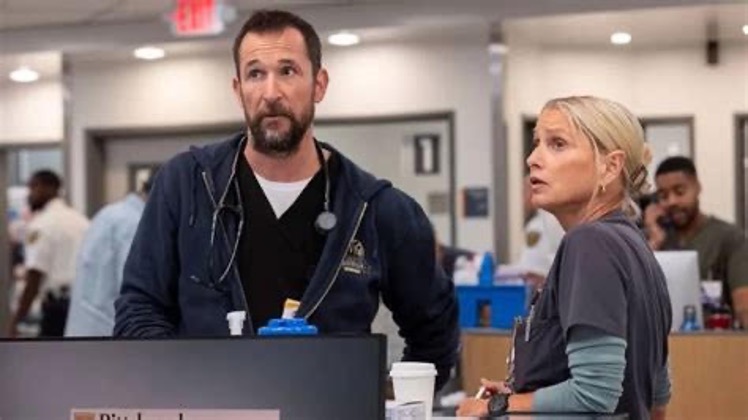
There is a scene in the excellent HBO drama “The Pitt” that lingers because it feels real to anyone who has worked in a high-stakes environment.
A medical student spirals into a panic attack and believes she is having a heart attack. The senior doctor evaluates her, determines she is medically fine, and tells her:
“Get yourself back in the game.”
It is blunt. Direct. No softness around the edges.
Later, another physician challenges him: “Wasn’t that a little tough?” In the teamwork business we call this “feedback on your feedback.”
The doctor apologizes for the tone but quickly returns to the standard. He understands that the panicked doctor is under pressure, worried about her mother, and carrying a lot. But when you are in this environment, you must be present. Personal issues are “no excuse.”
Why this moment matters
Before going further, it is important to say this plainly:
Care teams are extraordinary.
Doctors, nurses, techs, staff, admin, and everyone who makes the system work carry pressure most of us only see from the outside. They work productively and effectively under shifting constraints, with imperfect information, real human suffering, and stakes that matter. I see this in my many healthcare clients. I saw it growing up with my father, who was an MD. And of course, like everyone, I have unfortunately had my own experiences as a patient or a family member (too many times).
In real life, these people are skilled, disciplined, and deeply committed. Exhibit A in this same episode is the head nurse in the ED.
Calm. Grounded. Direct when needed. Supportive without tolerating victimhood. A stabilizing force in a system that could easily tip.
An everyday professional. An everyday hero. And still human.
The leadership tension: care and performance
That scene captures a tension every clinical leader lives with:
- Protect the patient.
- Support the clinician.
- Maintain the standard.
- Recognize human limits.
You do not get to choose only one.
When focus breaks down, the consequences are real. A cue can be missed. A decision can be delayed. A team can hesitate. So, the senior doctor’s instinct to reset the student quickly is grounded in his duty of care. He diagnoses the situation accurately, re-establishes focus, and reinforces the standard of leadership performance, which drives meeting the standard of care. That is not intentional cruelty. That is commitment to outcomes and values. And still, the moment is more complex than that.
He is human too
The senior doctor is not simply “the tough one.” Across the show, we see his compassion. We also see his pressure, his own humanity. At times, the pressure “leaks.” That raises a harder leadership question:
Was his sharpness only about her performance, or was it also about what he recognized in himself? Her loss of control may not just be a problem to correct. It may also be a mirror that hurts him to see. That does not make him wrong. But it does make the moment more human.
Because leadership is not just what you demand from others. It is also (mostly) what you bring into the room.
This is culture, not a one-off
Zoom out, and a pattern emerges. Just in this one episode we see:
- A surgeon is cutting with an intern (sorry, pun intended).
- An intern, under pressure, snaps at a doctor.
- The senior doctor pushes a student hard.
- The head nurse steadies the system.
Feedback is everywhere. Pressure is everywhere. And it moves in every direction. That is culture.
Pressure shapes behavior. Behavior affects trust. Trust affects communication. Communication could affect outcomes. And here is the most important point:
The people in that system are good: skilled, committed, trying. This is not a story about bad clinicians. It is a story about how pressure moves through even strong and successful teams.
Where culture helps, and where it can hurt
That pressure loop can produce excellence.
- High standards.
- Fast correction.
- Clear expectations.
- Discipline under stress.
Healthcare organizations work very hard on improving all of that, every day. But if that becomes the only response, something else can creep in.
Feedback might start to feel like criticism. Directness becomes indistinguishable from unfair or unkind edges. People keep performing but hesitate to speak up, vs. the best teams who catch and discuss mistakes early. They ask for help. They support each other in real time. The head nurse models this beautifully: steady, present, human, and effective. Her recipe comes with a teaspoon of cynicism and a more than a dash of gallows humor, but it works. That is not softness. That is closer to mastery.
A more complete leadership move
The senior doctor did what the moment required. But leadership is not only the moment. It is mostly what happens after. A more complete move might sound like this:
In the moment: “You’re not having a heart attack. You’re overwhelmed. Reset. Get back in.”
After the moment: “Let’s break down what happened so you can recognize it earlier next time and know how to stay effective when it counts.”
Culturally: “We are going to be direct here and will need to be tough sometimes. But we are also going to help each other get better, not just tougher.”
That is how leaders protect both patient care and their people.
The show gives us a clean ending
The student recovers. She finds her footing. She returns to the chaos of the ED with more awareness and control. She and the senior doctor repair the relationship. Mutual respect is restored. Sounds great. And if you have spent time in real teams, you may have had the same thought:
“I wish it always ended like that.”
Because in real life, not everyone rebounds that quickly. Not every relationship repairs so quickly, or ever. Not every hard moment becomes growth. Great show. Still TV.
So, was Dr. Robinavitch right?
Yes. And not entirely.
He was right to protect the standard. He was right to prioritize patient care. He was right about what the work demands. He was right not to lie to the intern or cover the truth.
And the episode also reminds us that even strong, compassionate leaders can let their own pressure shape how they lead. Not because they are bad leaders.
Because they are human. Just like my father was. Just like the people who save our lives every day.
Final thought
This episode is not really about one tough moment. It is about something much more important:
How do capable, committed people carry pressure, and how does that pressure move through the system?
Caregivers show up every day. They carry the work, the emotion, the uncertainty, and the responsibility. They have more than earned our respect. The leadership question is not whether they are tough enough. It is: are we helping them stay effective, support each other, and sustain the level of care their patients depend on? Are we developing their sense of agency or quashing it?
That is where patient experience, team performance, and humanity meet.
That same pressure might be moving through your team right now. You may be feeling it already. You may not be talking about it. Everyone keeps playing through the pain, the team keeps performing, despite of it.
That is the work I care about most: making the invisible dynamic visible.