There’s a moment every leader recognizes: the room goes quiet, decisions stall, and everyone looks around as if waiting for permission that isn’t coming. What happens in that silence reveals everything about how we lead—and where we might be holding our teams back.
Every so often, you have a conversation that reframes moments like these entirely—one that invites you to see yourself and your work differently. My recent exchange with former client and current friend Peter Buck was such a moment. Years after our coaching engagement ended, Peter sent me a note expressing appreciation for a learning that had stayed with him. That simple gesture sparked a rich dialogue about leadership, growth, and the patterns that shape how we lead.
Lead with Empathy, Finish with Structure
Throughout our conversation, we circled back to a tension many leaders face: the need for both empathy and structure. Peter captured it perfectly: “Lead with empathy, finish with structure.“ First, honor the perspectives, pressures, and emotions in the room. Then guide the team toward clarity and action.
He shared an example from a post-merger integration workshop where team leaders hesitated to make decisions, as if waiting for outside approval. Peter described the turning point:
“Eventually I said: ‘This is the team that makes the decisions now. You have the keys. Let’s map the journey.’ It broke the stalemate instantly.”
That moment illustrated what I call the quiet transfer of agency—giving others both permission and responsibility. It instills ownership, breaks deadlocks, and inspires teams to step forward.
Naming the Pattern: Incompetence as Threat
Peter’s reflection took an unexpected turn when he articulated something he’d been wrestling with:
“My system treats incompetence as threat. Not personal threat—but threat to progress, to clarity, to the integrity of the work. Now that I can name it, I’m learning I don’t need to approve or fix everything. I just need to categorize it, understand it, and move on.”
This is leadership maturity: realizing you don’t need to carry the emotional burden for everyone or solve every problem. It’s about recognizing your patterns early and redirecting to create the outcomes you want while avoiding the pitfalls you tend to fall into.
Peter continued: “Yes, I see patterns faster than most. Yes, I can forecast consequences before others have registered the variables. But that doesn’t mean I have to carry the emotional load for everyone in the room.”
True agency emerges when we let go of micromanagement and any compulsion to “fix” others. You serve progress best by transferring agency, not by shouldering every burden yourself.
Balancing Human Needs: The Cats and Dogs of Leadership
I often use the metaphor that team members act as both “cats” and “dogs.” Like dogs, we crave belonging, shared mission, and social connection. Like cats, we need autonomy and space to follow our own paths and express our individuality. Healthy teams—and healthy leaders—balance these needs, creating environments where individuals feel both connected and empowered.
This balance is especially critical during change, when both clarity and belonging are in flux. Leaders must attend to fundamental human needs: inclusion, control, openness, significance, and competence*.
Two Forces, One Pearl
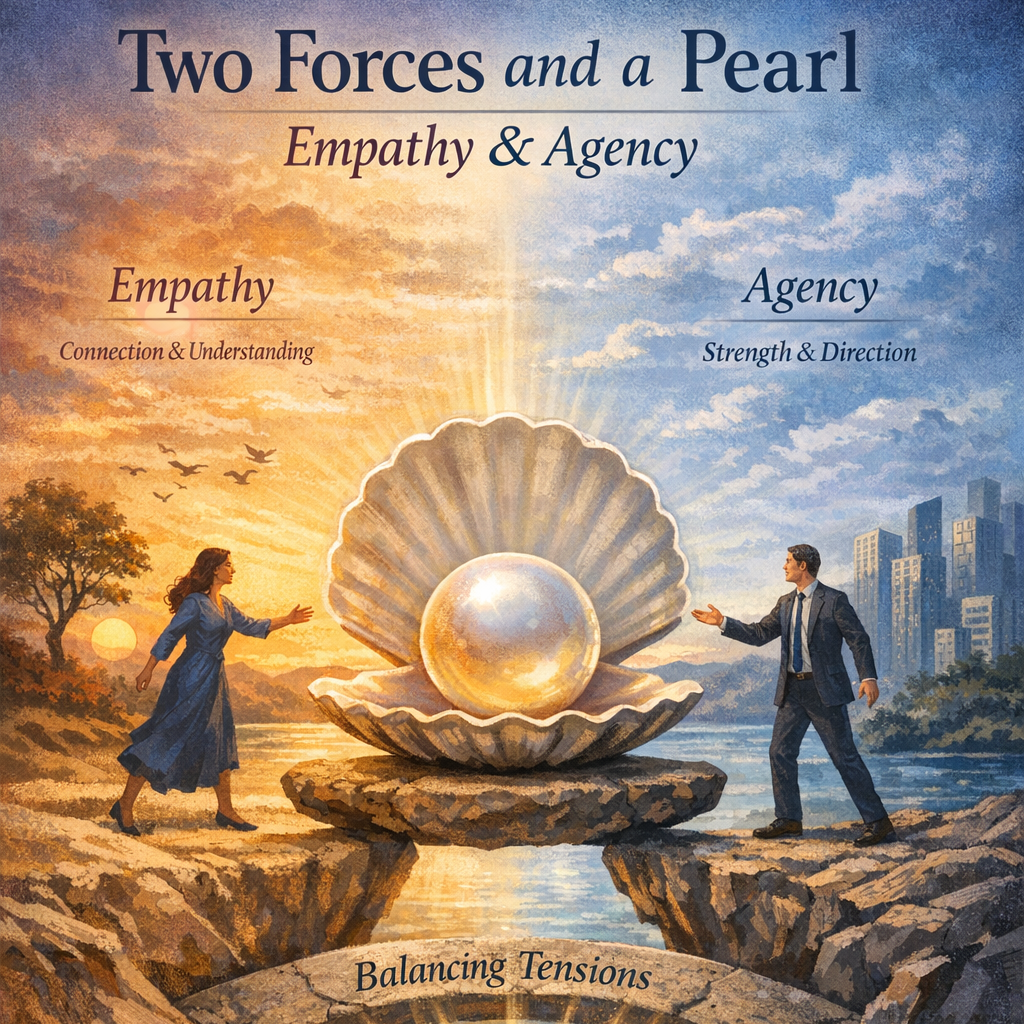
Near the end of our conversation, Peter shared a metaphor that captures much of our learning: “2f 1p”—two forces, one pearl.
We can frame almost any meaningful leadership challenge as two competing forces:
- Empathy versus structure
- Agency versus awareness
- Control versus inclusion
- Innovation versus efficiency
The pearl—the valuable outcome—emerges from holding these tensions in creative dialogue. The productive, sometimes uncomfortable tension between differing needs or perspectives generates the breakthroughs leaders and teams most need.
This pattern echoes throughout leadership: we rarely find simple solutions. Instead, we stay present in the tension between opposing forces until a generative new insight emerges. The resilience forged in reconciliation becomes one of our greatest leadership resources.
No, This Does Not Mean “Be More Positive”
Peter concluded our exchange with an observation that many leaders will recognize:
“Turns out I’m happiest when I’m in motion—outside, thinking, writing, or solving real problems. Everything else drains me. So the real work isn’t ‘be more positive.’ The real work is recognizing the pattern early and redirecting before the friction cascades.”
This is the invitation: reflect on the patterns that drive your own leadership. Notice the sources of agency you empower or withhold. Welcome the pearls that emerge from navigating inevitable tensions.
Leadership development is as much about relationships, observation, and curiosity as it is about frameworks and techniques. Whether you’re guiding a workshop, supporting a team, or reflecting on your own growth, listen for the patterns—both your own and others’.
Try This
Notice the pause. The next time a meeting goes quiet and decisions stall, resist the urge to fill the space. Name what’s happening instead: “It feels like we’re waiting for permission. What decision does this team own?”
Transfer agency out loud. Explicitly hand responsibility back to the room: “You have the keys. Let’s map the next step together.”
Name your pattern without acting on it. When you feel the impulse to fix, approve, or correct, try naming it internally instead of responding immediately: “I’m treating this as a threat to progress.” Then choose whether action is actually required.
Hold the tension long enough for a pearl to form. When empathy and structure feel at odds, don’t rush to resolve it. Stay present. Often the insight emerges after the discomfort.
Sometimes leadership is not adding energy, but redirecting it.
Empower agency. Reflect honestly. Remember: it’s the friction that forms the pearl.
*The Human Element. Will Schutz. Jossey-Bass Publishers, 1994.